
If I Had Cancer
Why Some Patients Get Casseroles and Others Get Criticism

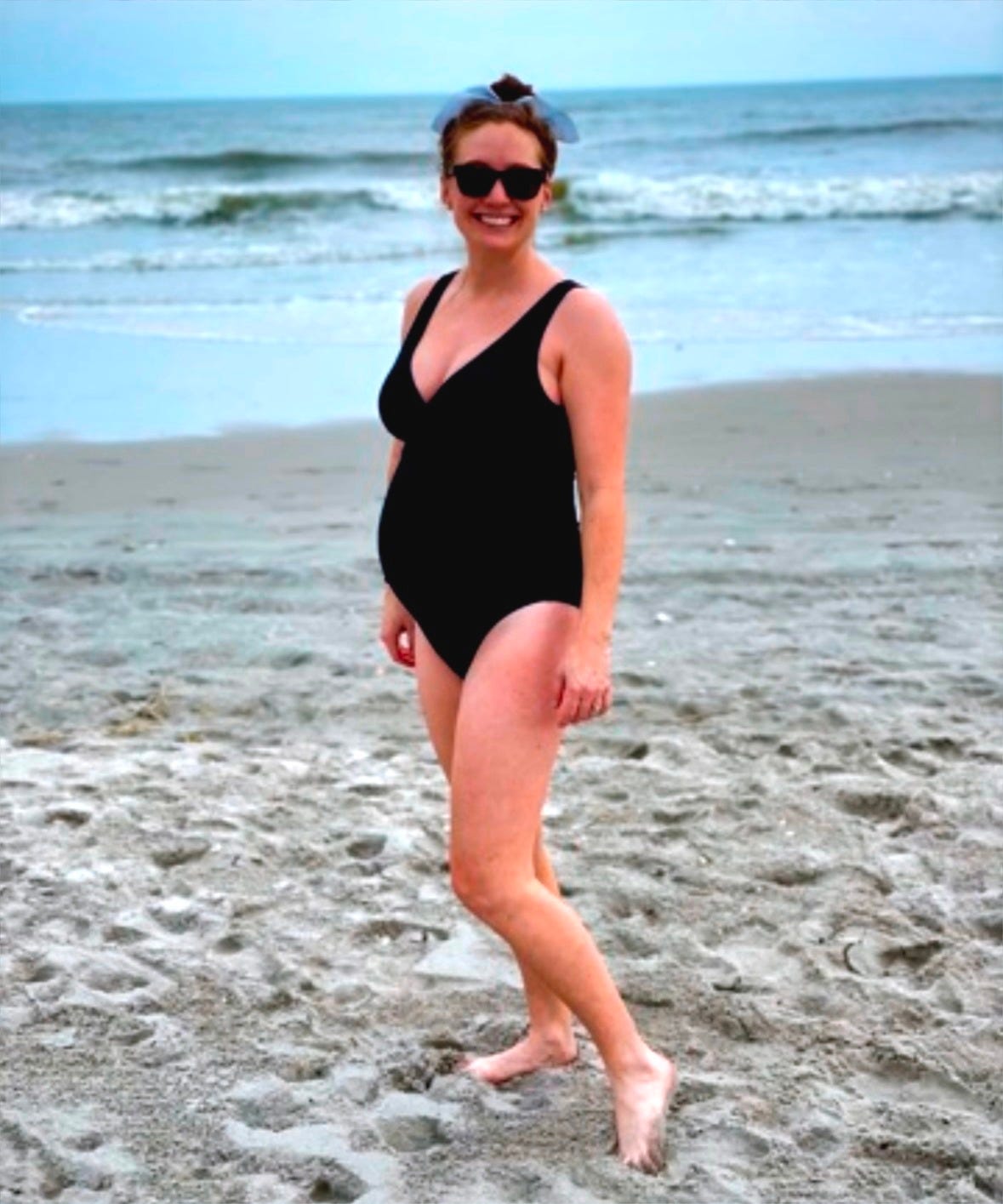
If I had cancer, a lot of things in my life would be different — for the better. And yes, I am already scared of the comments section.
But don’t just take my word for it.
This is not just anecdotal. It is supported by decades of research.
Before anyone accuses me of romanticizing cancer, let’s start with what the literature actually says.
The argument is not that cancer is easy. It is not.
Cancer is terrifying. It takes lives, devastates families, and leaves scars long after treatment ends — or after a life begins without the one they loved.
The argument here is different. It's that recognized illnesses come with social structures — and that those structures, more than the disease itself, often determine how a sick person actually lives. Their quality of life, not their prognosis.
This isn’t a competition. It’s all terrible.
I’m not arguing that cancer is better.
What follows is an argument that suffering is only part of illness. The rest is determined by what happens after you tell people you're sick.
What the Research Actually Shows
Let’s start with the broadest finding, because it is also the bluntest.
In a 2004 meta-analysis in Health Psychology, Robin DiMatteo reviewed 122 studies spanning five decades and found that practical support — the tangible kind, rides to appointments, help with the logistics of being sick — bears the highest correlation with whether patients stick to treatment at all.
Then she found the part that’s harder to sit with: adherence is about 1.74 times higher in patients from cohesive families, and about 1.53 times lower in patients from families in conflict.
It is not only that help helps. But also that conflict actively subtracts. A family in conflict does not leave a sick person at zero. It pulls them below it.
This is where a distinction becomes load-bearing, so I’m going to name it once and lean on it the rest of the way. Researchers separate instrumental support — the practical stuff, the driving, the prescriptions picked up, the appointment kept — from emotional support: empathy, validation, being believed.
A 2023 review in Series of Clinical and Medicinal Case Reports and Reviews notes that emotional support is the form researchers most often mean when they say “social support” at all. It is treated as the center of the whole concept.
This context matters enormously, because the two do not cancel out.
You can be driven to every appointment by someone who also tells you the illness is a personality flaw. You can have your prescriptions managed by someone who does not believe you are sick.
One column of the ledger can be full while the other is empty, and the research is clear that a full practical column does not buy back an empty emotional one.
They are different nutrients. You can die of one deficiency surrounded by an abundance of the other.
The Double Bind
There is a problem the literature struggles to capture. Every chronically ill person will immediately recognize this phenomenon:
The healthy version of me becomes evidence against the illness.
The sick version of me becomes evidence against me.
When I am productive, articulate, publishing essays, coordinating medical records, showing up to appointments, parenting four children, and forcing myself through the day with extraordinary amounts of medication, people point to that version and say:
“See? You’re doing great.”
The functioning becomes evidence that the illness cannot be that severe.
But when I am angry, grieving, exhausted, frustrated, or overwhelmed, the rules suddenly change.
Then the emotion itself becomes suspect.
It’s the stimulants. It’s emotional regulation issues. It’s the stress. It’s the medication.
It’s anything except a rational response to what is actually happening.
The result is a remarkable double bind.
The only emotions considered legitimate are the ones that make healthy people comfortable.
Be cheerful.
Be grateful.
Be resilient.
Be inspiring.
Be productive.
But if you become angry, if you become sad, if you object, if you point out unfairness, your reaction becomes pathology instead of evidence.
No one would look at a cancer patient receiving chemotherapy and say:
“I think there’s a really great person underneath all those medications.”
The statement sounds absurd because everyone understands that the treatment is part of what allows the patient to function.
Yet chronically ill people hear versions of this constantly. I heard it verbatim just last week.
I feel like there is a really great person underneath all your meds.
I was told as though it was revelation, not devastation. What that person won’t, or cannot, see is that I’m the same person I’ve always been: relentless maybe more than anything else, funny, caring, perceptive, and, most importantly, whole. I’m just sick now too. And that looks different. I mourn the old me too, but I see value in the new that most people from “the before” can’t see.
We are expected to function as proof that we are not sick. And then expected to suffer silently as proof that we are.
It is a game you cannot win. I've been playing it for years.
The only acceptable chronic illness is one that remains invisible while somehow never affecting your mood, your relationships, your parenting, your marriage, your work, or your personality.
In other words: The only acceptable chronic illness is one that does not exist.
Moms Like Me
Moms with cancer get sympathy and support — both practical and emotional.
Moms sick like me get judgement and criticism.
You aren’t there enough. Then you’re there too much. Then you’re “a disruption.” You “do nothing,” but then try to participate, and the criticism and the corrections become so suffocating, you retreat just for breath so you can stop performing, even if just for a moment.
If a mom like me asks someone whether I've done anything right as a parent at all, the answer comes back thin. Hedged. Slow. They're thinking … and thinking… and then I was told recently:
You love them. You’re kind to them. … I don’t know.
That was the best a close family member could come up with — the whole list.
Loves them. Is kind to them.
I could have been the absurdly expensive ice cream truck that terrorizes our neighborhood during dinner time, the kids’ second cousin, a babysitter, hell those words could describe almost anyone who interacts with my kids.
But I am their mother.
If I were a mom with cancer, the answer would come easily — the advocacy, the intuition, the sacrifice, the staying engaged despite being sick.
Cancer makes those things visible. My illness makes them disappear.
A few years ago I was running a law firm and teaching law at night, and mothering my oldest children largely on my own as my husband traveled several nights a week for work. No one had a problem with my parenting when I was shiny and didn’t require anything from them. I gave. Now I am forced to take, constantly, and my parenting gets summarized as “you just give them candy and dress them up.” That one is a direct quote. I promise you my kids’ daycare would beg to differ. My second has worn two left shoes all day more than once this year.
But that’s what illness does. It doesn't just take your present. It rewrites your past until even you start to wonder what was real.
Two years ago, two months postpartum, I asked someone at the end of the day why nobody had wished me a happy Mother’s Day.
The answer came quickly, almost instinctively.
Because Mother’s Day isn’t for you.
It’s for moms who actually add value.
It doesn't matter who said it. What matters is that someone could — and that the logic underneath it, that a sick mother adds less, is everywhere. In a text. In a comment section. In person. From a stranger, a relative, a friend who thinks they're being honest.
And maybe what matters most of all — I believed it then. Those words have haunted me for years, and they’re likely to continue to do so in years to come.
I remember being stunned into silence. I had two newborns, two toddlers, four kids total all under two and a half years old, stitches that hadn’t fully healed, and trauma from a very mishandled delivery where I’d been separated from my twins for three days (more on that here).
Illness had already begun erasing everything that came before it.
That sentence — It’s for moms who actually add value — explained more about chronic illness than any medical journal ever could. It took a long time to rediscover my value, and, even harder, believe in it.
They Counted the Ring. Not What It Meant.
The reason cancer keeps showing up in the literature as protective is not magic.
It is the support bundle.
Cancer has a script. People know what to do. They bring casseroles no one really wants. They organize meal trains. They send flowers. They offer childcare. They ask how you’re doing. Heads are shaved in solidarity. Most importantly, they believe you.
Cancer has a social script that many chronic illnesses don’t.
No one ever shows up with a lasagna and says, “I heard your cortisol levels are weird.”
Nobody sends a sympathy card that says, “Thinking of you during this difficult pulmonary workup.”
People understand cancer. They understand what it means. They understand what is expected of them. The illness is visible. The threat is legible. The suffering is culturally recognized. People rally.
You become a fighter, not a burden. A survivor, not a nuisance. You are the center of the home, still. Not the person listening to their kids laugh through the floorboards at the stupid reusable water balloons I’d gotten them on Amazon. I’d imagined being there. We’d go out on the porch. Life would feel normal, and the kids would get normal, for once. They’d see their mom for who she is, not a temporary stand in everyone thinks will somehow transform back. It doesn’t work like that.
These labels, these mythologies of illness, the rhetoric of being sick — it matters more than most healthy people realize.
In a population-based breast cancer study published in Cancer Medicine, married patients were understood to have more emotional and financial support, which helped them get diagnosed earlier, receive appropriate treatment, adhere to treatment better, and ultimately live longer.
Marriage shows up, over and over, as a survival advantage in cancer registries.
But “married” is a crude instrument. The better studies admit this. Several note, almost apologetically, that they could not measure the quality of the marriage — only its existence — even though quality is precisely what determines how much support is actually available.
They counted the ring. They could not count what the ring meant.
When researchers do measure quality, the ring stops protecting anyone. A 2009 study by Yang and Schuler in Cancer — the journal of the American Cancer Society — followed breast cancer survivors over five years and found that marital distress was associated not only with worse psychological outcomes, but with poorer physical health and a steeper decline in physical activity.
Same diagnosis. Same treatment.
Different households. Different bodies five years later.
A bad marriage is not neutral during illness. It is a measurable, physiological drag on recovery.
This is the part people miss. When a family member tells you that you are a burden, the body pays. When someone decides that your symptoms are really your emotions, the body pays. When every concern you raise is reinterpreted as a character flaw, a medication side effect, a failure to regulate, the body pays.
When you're hurt and retreat upstairs crying, it's not a choice. It's the body's natural response to years of being sick in public and disbelieved in private.
The literature does not describe these things as unfortunate interpersonal disagreements. It describes them as variables.
Risk factors.
Health outcomes.
The body keeps score whether everyone else wants to call it stress, conflict, drama, negativity, or not.
And that is before we even get to the illnesses people do not believe in.
And Then There Are the Illnesses Nobody Knows What to Do With
Researchers have found something that sounds impossible at first.
Studies comparing health-related quality of life across diseases have consistently found that people with Myalgic Encephalomyelitis/Chronic Fatigue Syndrome (ME/CFS) report some of the lowest scores measured in medicine.
A 2015 study in PLOS ONE by Hvidberg and colleagues found ME/CFS had the lowest health-related quality of life of twenty conditions compared — including cancer, diabetes, stroke, and multiple sclerosis. A 2025 systematic review in the Journal of Translational Medicine continued to document the same profound impairment among people living with ME/CFS.
Lower than cancer.
Lower than heart disease.
Lower than illnesses that receive vastly more recognition and support.
That does not mean the disease is biologically worse than cancer. It means the lived experience can be more disabling, more isolating, and more disruptive than most people realize — in part because no one around the patient realizes it.
Why?
Part of the answer is obvious: The disease itself is devastating.
But the other part is harder to talk about. People do not know what to do with it.
A 2022 study in the Journal of Health Psychology found that when people with ME/CFS believed others saw them as responsible for their illness, they felt more stigmatized — and their quality of life measurably dropped.
The disbelief is not a side effect of the illness. It is a second illness, layered on the first, and it is administered by the people in the room.
A 2015 systematic review by Band, Wearden, and Barrowclough in Clinical Psychology: Science and Practice examined how patients fare depending on how the person closest to them responds.
When that significant other believed the patient was responsible for their own symptoms — that they brought it on, that they were sustaining it — patient distress went up.
Negative responses from the closest person were linked to greater symptom severity, more disability, more distress.
Sit with the mechanism. When the person nearest you decides your illness is your own doing — your meds, your emotions, your failure to regulate — you do not just feel worse.
You get measurably worse.
A study published in PLOS ONE found that family and friends often responded to ME/CFS with disbelief and stigma. Rather than helping patients cope with the illness, these relationships sometimes became an additional source of hardship. Researchers called these “disabling communities.”
In other words, the family itself can become part of the disability.
There is no ribbon. No telethon. No movie. No social script. No universally recognized image of suffering. There are no “fighter” Facebook messages acknowledging the person’s status and honoring the challenges they’ve overcome.
Cancer terrifies people. ME/CFS confuses them. And confusion does something fear does not. Fear rallies.
Confusion adapts slowly but surely toward blindness. What people cannot easily categorize, they often reframe into something they can.
At first people help. Then they compensate. Then they reorganize. Then they stop asking. “Caregiver fatigue” is a real thing.
No one can give of themselves endlessly, especially without a rubric to follow.
So they reframe: lazy, dramatic, difficult, attention-seeking, a hypochondriac, somehow responsible for their own suffering.
Not because they are cruel. Because uncertainty is exhausting, and explanations are easier to live with than questions.
This is where the real loss begins.
This Is Me Missing Another Thing
Yesterday afternoon everyone went to the pool.
I stayed behind. Not because I didn’t want to go. Not because I had other plans. Because I had to make a calculation.
I have four children. Bedtime is still coming. And I have a finite amount of energy. So I rationed it. I saved my daytime stimulant dose so I’d be able to do bedtime.
Pool or bedtime? Memory or survival?
I chose bedtime because it was necessary.
I helped get the girls ready. I put sunscreen on them. I handed my husband the supplies I’d bought in anticipation for this very day — the first pool day of the summer. I took off my daughter’s dress to get her shoulders and upper legs. Then I got in bed, exhausted from even that tiny amount of effort.
I listened to the excitement and petty arguments and instructions to “take turns” and tried to be braver than I felt. I watched the day assemble itself. The pieces seemed to fit perfectly without me.
Then my four-year-old re-appeared at the door.
“Mom,” she said, “I promise I’ll tell you all about it when we get back.”
Not routine. Not normal. Not merely the latest item on an ever-growing list of accommodations.
It was a loss.
Maybe because children have not yet learned the adult habit of explaining suffering away. They simply see it.
Mom can’t come. Mom is quiet. Mom might be sad. I will bring the story back to her.
The adults were busy discussing logistics. She noticed the loss.
And then, from chaos to calm in an instant, they were gone. Where just moments before there'd been a bustle of chatter and excitement, I sat. Left behind as they moved on.
Sitting on the edge of my bed, I wiped my tears away with the dress I had just taken off my daughter.
Another thing.
Another pool day.
Another birthday party.
Another holiday.
Another memory.
Another Saturday.
The losses of chronic illness are often described as dramatic. Careers. Health. Independence. Those losses are real. But they are not the only losses.
It is a collective memory everyone else will share later.
A collective life, built, without me in it.
You get sick. Life keeps moving. As it must. As it should. The children should go to the pool. They should laugh. They should run through sprinklers. They should collect memories. I do not want their lives paused for my illness.
What I want is harder to explain. I want to still be part of the story. I want someone to notice that I am missing from it. I want the loss to be seen for what it is.
If I had cancer there might be a video call from the pool or photos sent over of the twins splashing in the baby pool. Maybe even a “we wish you were here” text.
But I don’t have cancer, so I also don’t have any of those things.
Just photographs on my phone. I see myself at that very pool, before all of this.
I study them because I can no longer see myself in that person.
Carrying towels. Applying sunscreen. Chasing children. Laughing.
Not listening to a day happen.
In it.
The Fear Beneath the Fear
Eventually a terrifying question begins to emerge.
At what point does adaptation become replacement?
I don’t think healthy people spend much time thinking about this. Why would they?
If you are healthy, adaptation is a success story. Someone gets sick. People step up. The kids are cared for. The bills get paid. The meals get cooked. Life continues. That’s what resilience looks like.
From the outside, it is a beautiful thing.
From inside the illness, it can feel very different. Because every adaptation contains a hidden question.
What happens if they get too good at it? What happens if everyone learns how to function without you because they had to? What happens if the systems become permanent? What happens if your absence becomes normal?
There is a fear that lives inside chronic illness that healthy people rarely see.
Not the fear of pain. Not even the fear of death.
Everyone seems to see and acknowledge the fear that something progressive and serious is quietly taking your life away from you while you spend hours dreaming of a healthy version of yourself.
Beneath it, there lives a fear that I don’t think healthy people fully understand.
The fear that one day everyone will know how to function without you because they had to.
The fear that everyone you love is slowly learning how to live without you. The fear that by the time you recover — if you recover — the world will have moved on.
The fear that your role in your own life is being redistributed in real time. A little piece here. A little piece there.
Someone else does bedtime. Someone else drives. Someone else makes the decision. Someone else takes the kids. Someone else speaks for you. Someone else explains you.
Until one day you wake up and realize that the thing you are grieving is not merely health. It is participation.
You are still here. But less and less of life seems to require your presence.
That is the fear beneath the fear. Not death. Erasure in real time.
What Support Actually Is
I am not asking for pity or an influx of messages, nor for praise or anything in particular but to be seen.
I am asking people to understand that support is not merely rides and prescriptions. Support is remembering the person is still here.
And if I had cancer, people would know what to do. The tragedy is not that people stopped caring. The tragedy is that they adapted so well they stopped noticing.
None of this is hypothetical.
Over the past two years, objective findings have accumulated faster than explanations.
The point is not the list of diagnoses. The point is that the legitimacy problem persists even after the evidence arrives.
The tests came back. The findings are real. The symptoms are real, and the suffering is real. And still, I am asked, often without intention, to prove, over and over, that I am as sick as the paper says I am.
After they left for the pool, I sent out a message to the adults who went.
A reminder.
A dispatch from someone deserted on an island, not paradise, but purgatory, a flare sent out with hope someone might just see me again.
This is not a choice.
Missing my children’s lives is not a choice.
It’s grief. Not emotional regulation issues. Heartbreak.
Each and every single thing I miss — you never get used to it. Each time hurts just as much as the first.
It is always unbearable.
The quiet part after you go. That is always the worst part.
I never got any response back.
They were busy with four tiny wild things — trying against all odds to keep them alive and sunburn free at the pool.
They were exactly where I wanted to be.
Exactly where I belong.
And exactly where I’m not.
But seriously, don’t bring me a casserole. Nobody was going to anyway. But if you do: I’m gluten free, and I’m at my parents’ house so note the address change.
That’s a whole other …. let’s just say it’s a long story.
If you know someone whose illness doesn't come with a casserole — send them this. Sometimes being seen starts with someone else remembering that you’re still here.
I have ME and have also had cancer (twice). Yes, people respond differently to those two diseases. But it’s not that simple. There are people with cancer who are not surrounded by supportive people. When I had cancer, not everyone in my life supported me the way I needed. I am fortunate that everyone in my life tried, even if they missed the mark. My hope for you is that you are surrounded by people, like your daughter, who try.
I read this all the way through, including the message you sent that got no reply, and the dress you wiped your tears with. I do not think there is a person hidden underneath the illness, waiting to be recovered separately from it. You are right here, whole, in every line of this, sick too, but not instead.
The thing you have named that I will carry is that some illnesses arrive with a script people already know how to follow, and others leave the person spending their first and scarcest energy just becoming believable before they can be helped at all. That is not a competition between diseases. It is that some suffering comes with a bridge already built between private pain and public response, and some makes you build the bridge yourself while already exhausted by the crossing.
You asked to be seen rather than pitied. So, plainly: I see the participation you are grieving, not just the health. And your four-year-old, “I promise I’ll tell you all about it when we get back,” already sees you completely. That is not nothing. It may be the truest thing in the whole piece.